Showing posts with label WHEAT. Show all posts

10 May 2023

Phytosanitary treatment by drone

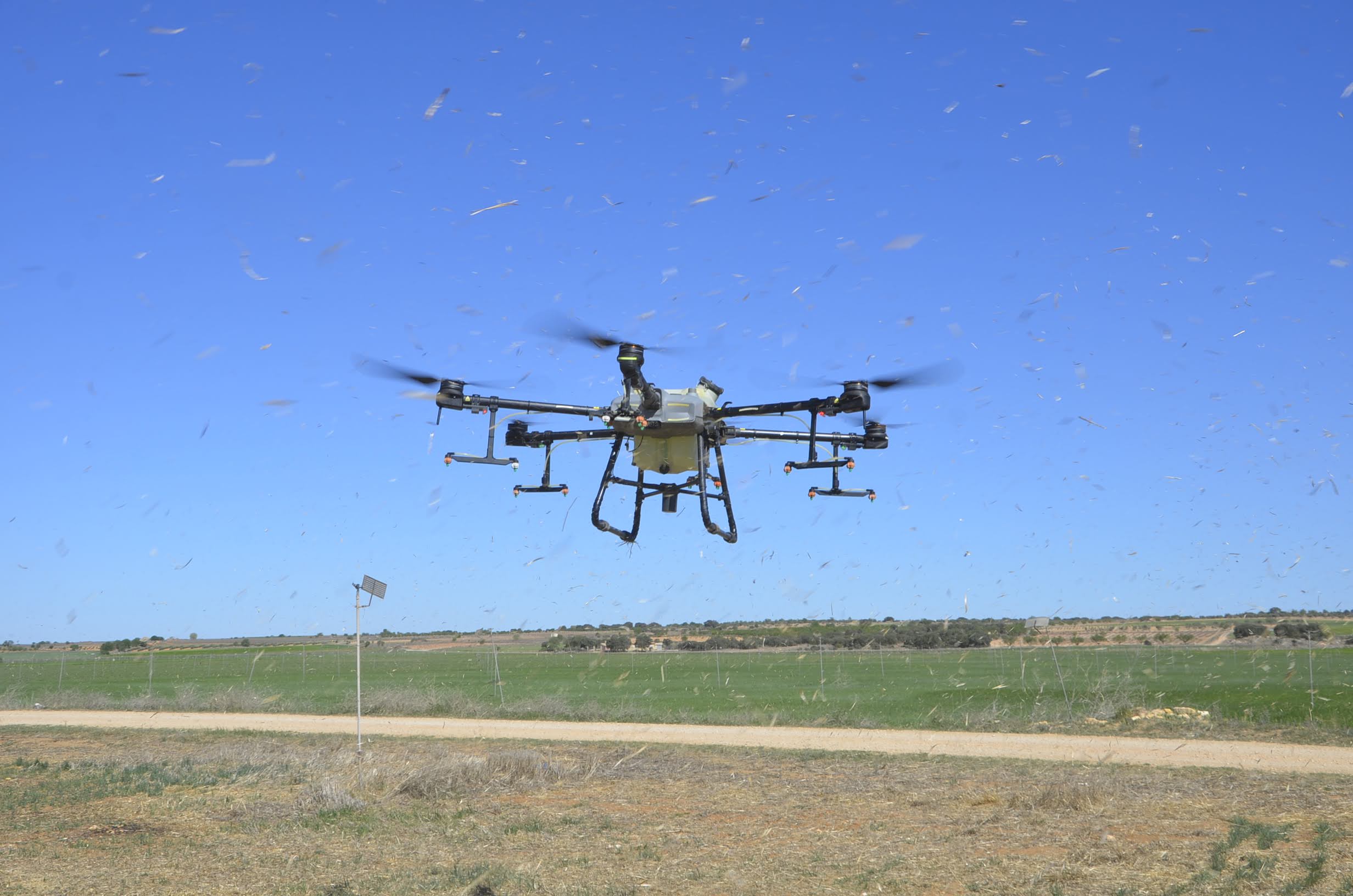
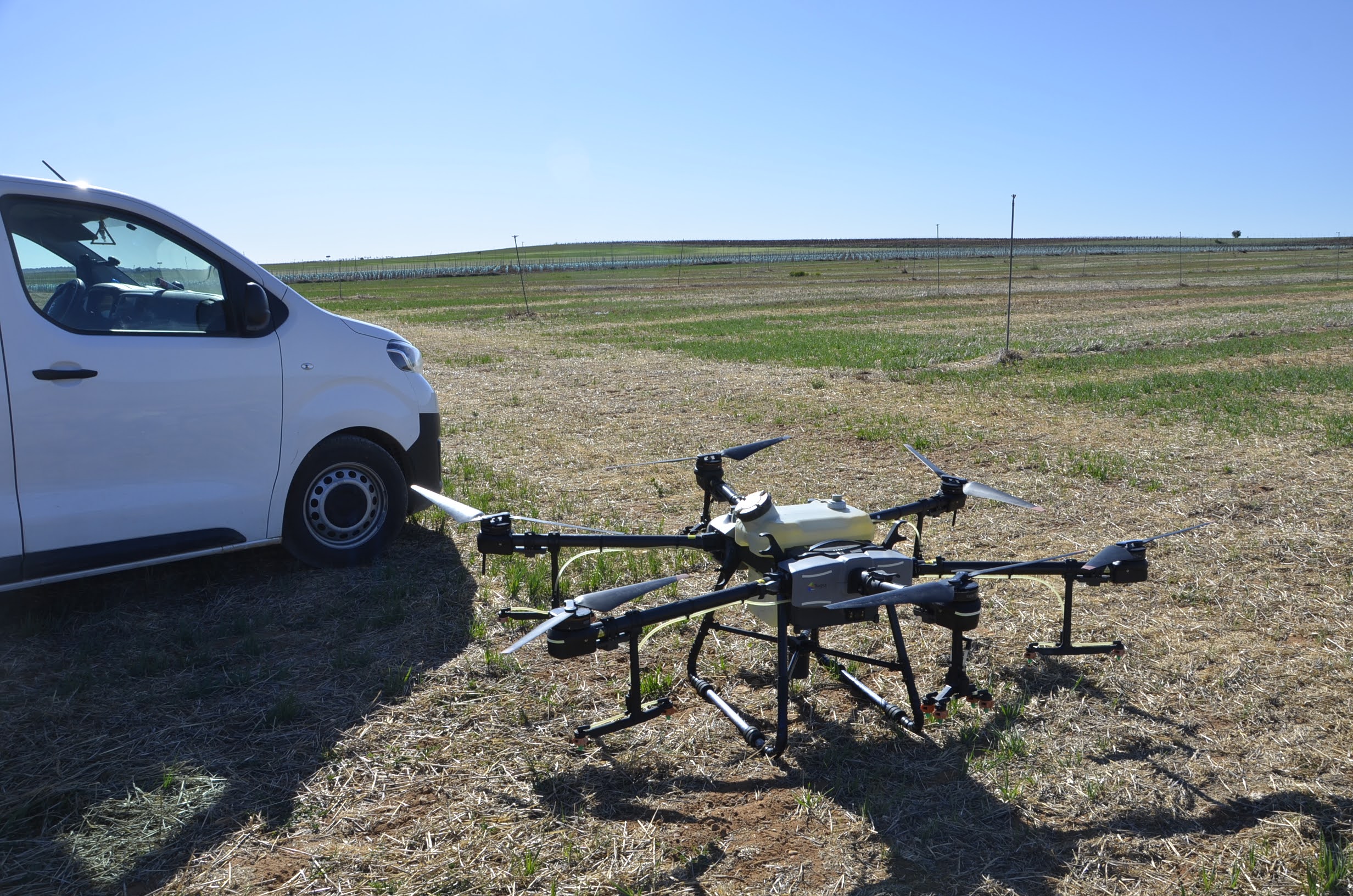
Our friend Luis Alcázar, from the company Pulveriza Dron, offered us to visit him at his work with the DJI Agras T30 drone. It was the first time we saw an agricultural drone working. The morning was very interesting as we were able to learn about the working process of the device... but let's take it step by step. 

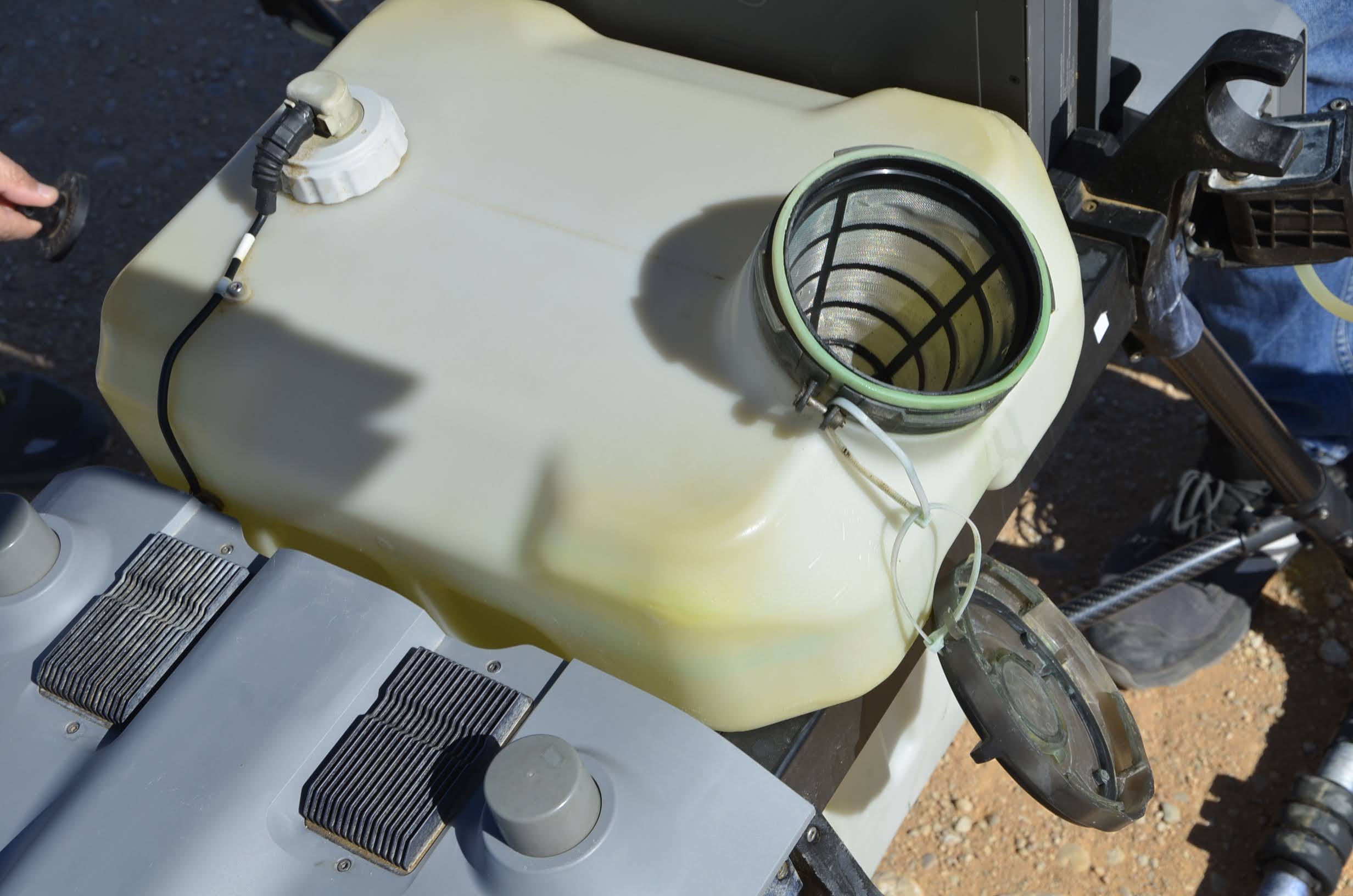
First of all, before making the flight, it is necessary to setting the program the flight so that the work is almost automatic. To do this, you have to geolocate the field and configure the working width as well as different parameters according to the work to be done, the type of crop, etc. Once the drone is ready to fly, it should be noted that the batteries last about 6 minutes and therefore that will be the time to empty the 30 litre tank the drone carries (there is also a tank for solids which is similar to a small fertiliser spreader). It is important to have several batteries and a generator that recharges them in order to be able to work a full day. 

Secondly, the plant protection product to be used in the treatment must be prepared. This product is usually mainly active material, but water is also used to make a correct mixture. This mixing is usually done in an auxiliary tank of 500 litres and one of the operators oversees supplying the liquid while the other changes the batteries... two people usually work with the drone: pilot and handler of phytosanitary products. 

Finally, our impression was that it is a tool to be taken into account for crops or situations where you cannot enter with the tractor or Unimog (high crops, muddy or waterlogged areas, etc.), it is a perfect solution. In addition, in high-yield crops (irrigated cereals, etc.), it is an advantage as it does not damage any part of the field (tractor ruts) and therefore you have more yields, the crop is uniform in its entirety and harvesting task is easier.
Versión en español.


17 March 2023

Cereals. Works until harvesting days

After sowing and sprouting, we are still working on winter cereals. The tasks to be done until harvesting are basically based on three tasks: fertilisation, compaction and weeding.  

In this post you can see our fertilisation strategy, this year we have chosen the fertiliser Marte45 from the Spanish manufacturer Medifer with a dose of 240kg/he. It is a fertiliser that we have used in several previous years with very good results and it is also the one we have found at a reasonable cost (although too expensive compared to the previous years prices). Let's wait for the rains so that the plant can absorb all the fertiliser. 

We will wait for it to rain so that the fertilizer could be taken by the soil plants. 

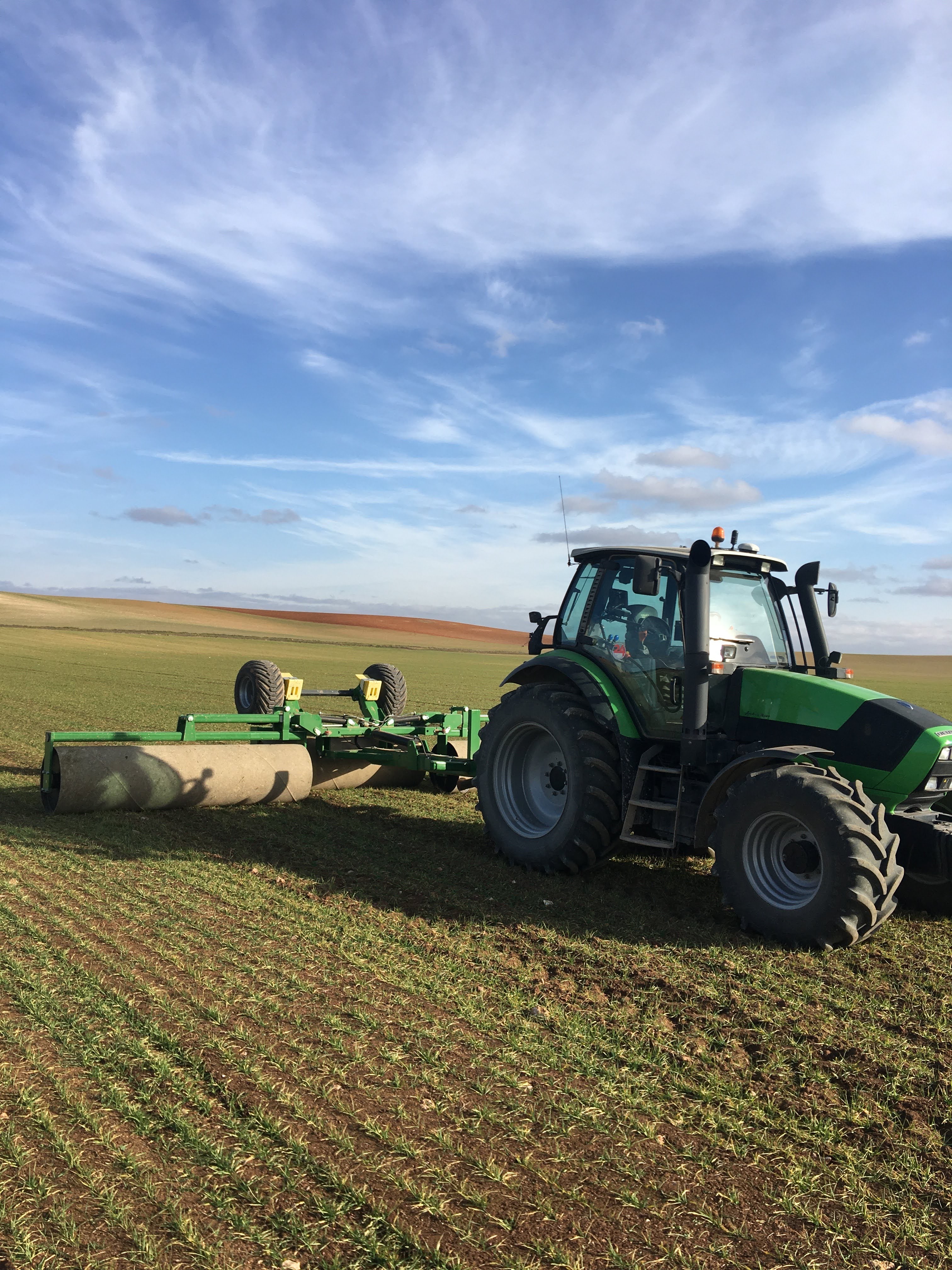
On the other hand, after the mulch fertilisation, we have rolled the soil to compact it. The goal is to better fix the root to the soil and the stones we have hidden in the ground so that we can have a more comfortable harvest job. For this task we have used our new roller, from the manufacturer Gaher Metalic

The next job, and perhaps the last one before harvesting, is to apply the necessary phytosanitary treatments to kill weeds and to take care of the plant if we detect any disease... but we will surely talk about this in another post. 

Versión en español.


31 December 2022

Cereal and pulse vegetables sowing days

In the months of November and December, agricultural work is focused on sowing. Firstly, we start with cereals and then with pulse vegetables. In cereals, we initially sowed triticale (Orval variety), then we continued with wheat (this year we sowed the Albufera variety, which is a short-cycle wheat) and finally we finished with barley (this year we sowed Rubiana and Medinaceli)... along the months of November and early December.  In November we had serious doubts about when to start sowing as it did not rain until mid-month, the soil was very dry and also the rain forecasts were not at all positive. In the end it rained and we had a very good sowing season. 

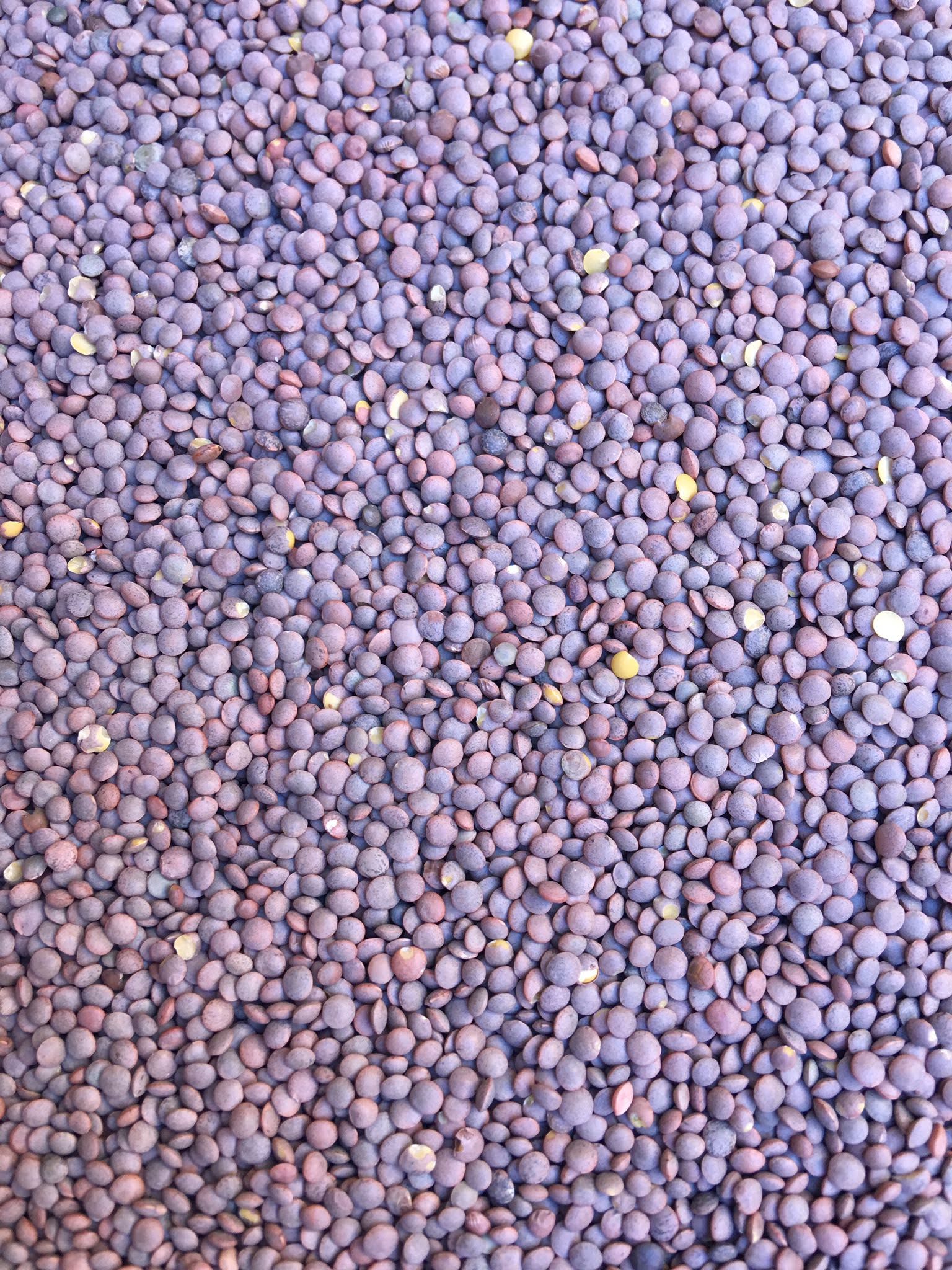
Now, during these Christmas days we are sowing pulse vegetables:  lentils (Eston and Pardina varieties) and bitter vetch. With the new CAP, many farmers have started sowing pulse vegetables. In our case, we have not noticed any difference because we have been rotating with pulse vegetables instead of sunflower for several years (which is the most common in our area, for example). Very dry summers and high temperatures make sunflower no longer attractive in terms of yields. 

During the first days of November (with very dry soil) we did a small nascence test as you can see in the pictures. We sowed a few grains at different depths to see how they are born and how they evolve in the first weeks of growth. Days after sowing, we could see a lot of rainfall, so the soil conditions changed dramatically. The grains that we sowed around 2 cm deep clearly emerged very quickly, but those that we sowed at 6 cm and 9 cm have come out quite well and I would even say that today the plant looks even better than those sown at 2 cm... we will keep an eye on developments. 

We would like to take this opportunity to wish you a Merry Christmas and a Happy New Year 2023 full of health, good harvests and fair prices. 

Versión en español.